The Hidden Cost of Offshore Club Software Support
Making the case for Country Club Software with U.S. & Canada-Based Support
Private clubs rely on software for nearly every part of daily operations. Dining service, member billing, tee sheets, accounting, events, inventory, and reservations are now connected through one platform. When something breaks, the issue is no longer isolated to the IT department. It affects everybody.
That complexity has changed how clubs evaluate software vendors. Historically, clubs prioritized features. In 2026, support responsiveness and operational familiarity carry as much weight as the software itself.
The central question has shifted from:
“Does this platform have the functionality we need?” to “What happens when we need help?”
That distinction matters because software problems inside a private club rarely stay isolated to technology departments. They affect hospitality in real time. A delayed POS sync during dinner service, a billing issue before statement processing, or a tee sheet disruption before a busy weekend quickly becomes visible to members and staff alike.
This is why support is increasingly viewed as infrastructure rather than as secondary.
The Problem with Generic Club Software Support in 2026
Most clubs do not have large internal IT teams. In many cases, department heads are already stretched thin managing staff, members, events, and daily operations. When software problems appear, they need fast answers from someone who understands the situation immediately.
This is where most club management software support teams break down.
Large offshore call centers are typically designed around scripted workflows and escalation processes. Their role is often to filter requests before they eventually reach someone with deeper product knowledge. While that structure may reduce costs for software companies, it can create delays and frustration for clubs trying to solve operational problems quickly.
AI is also changing the role of support teams.
Many lower-complexity support requests, such as password resets, reservation confirmations, and basic troubleshooting, are increasingly handled through AI systems and self-service tools. While that improves efficiency for routine tasks, we can’t forget that larger issues require human attention, and a club may need more than a chatbot to address its problems.
In those moments, clubs are not simply looking for someone who understands software and tech support scripted talking points. They need support personnel who understand how private clubs actually operate.
That shift is one reason many clubs increasingly prioritize U.S. and Canada-based support teams with hospitality and club experience. As software environments become more interconnected, operational familiarity becomes just as important as technical troubleshooting.
| Support Consideration | Offshore Call Centers | U.S. & Canada-Based Support |
|---|---|---|
| Operational Familiarity | Limited exposure to private club workflows | Direct experience with hospitality and club operations |
| Resolution Path | Scripted workflows and multi-layer escalation | Direct access to staff with product and club knowledge |
| Cost Structure | Lower vendor cost, higher hidden operational cost | Higher invested support, lower disruption to member experience |
Why Operational Experience Matters
The best club software support teams (i.e. Buz Club Software) are not simply technical support reps. They understand how clubs function operationally.
That includes familiarity with:
- member billing and house accounts
- dining and point-of-sale workflows
- golf and tee sheet operations
- inventory and reconciliation processes
- event and banquet coordination
- staff onboarding and training
Operational familiarity matters because it shortens the path to resolution and minimizes escalation. Clubs spend less time explaining the problem and more time solving it.
It also creates better long-term outcomes. Many operational issues inside clubs are not software failures at all. Sometimes they stem from incomplete setup, inconsistent training, or underutilized features. A support team with club experience can often identify those gaps quickly and help staff work through them more effectively.
Why Buz Club Prioritizes North American Support
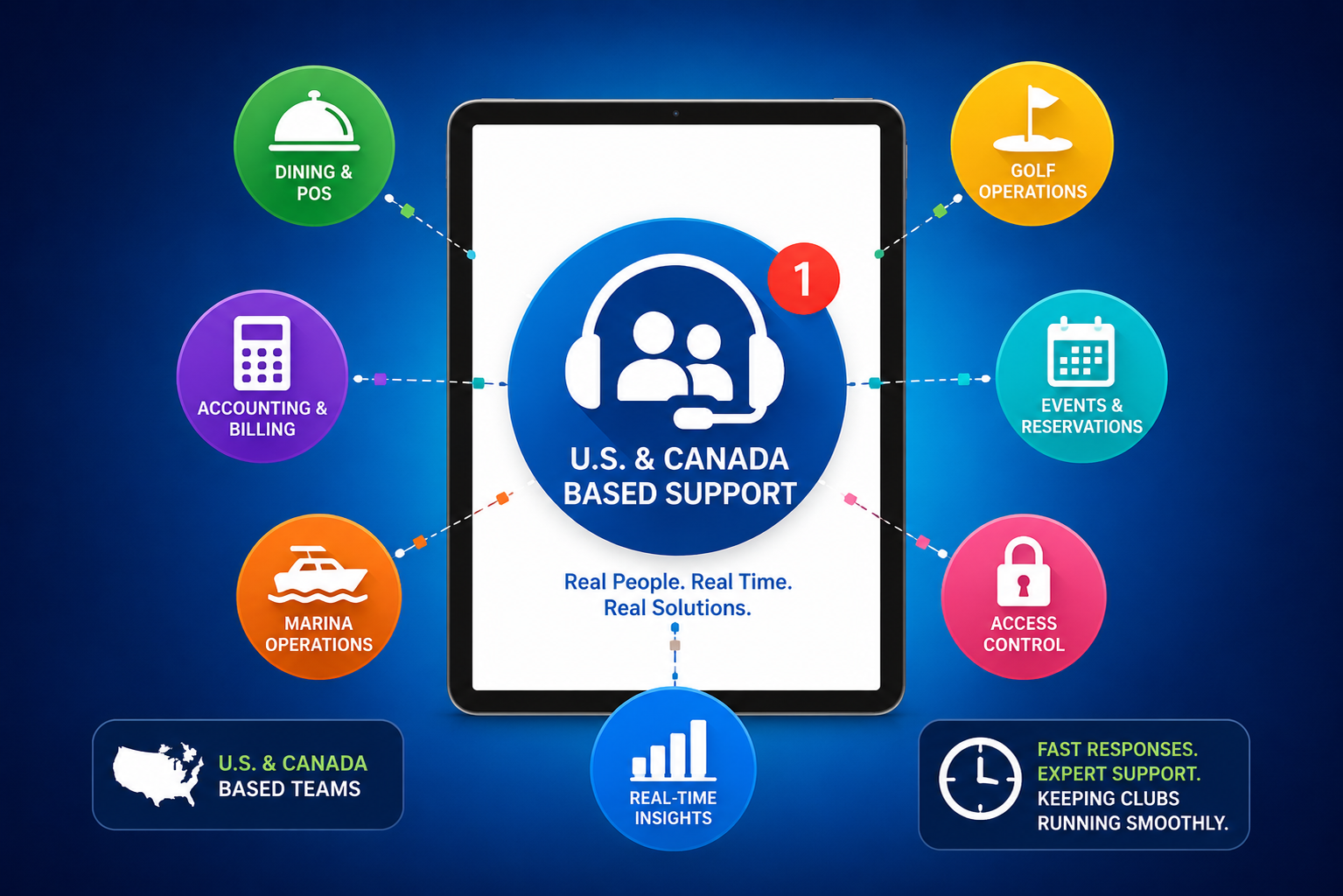
At Buz Club Software, support is handled by U.S. and Canada-based team members with real club industry experience.
The goal is not simply to answer tickets. The goal is to help clubs work through operational problems with people who understand the environment they operate in every day.
Buz Club does not rely on generic overseas support centers reading from scripts. The support team understands club accounting, dining operations, member billing, golf operations, reservations, and day-to-day club workflows.
Support requests are managed through a structured ticketing system so clubs receive proper tracking, documentation, visibility, and follow-up across the organization. That process also helps prevent the common industry problem where requests get tied to one specific employee who may be unavailable or out of office.
At the same time, the support process is designed around responsiveness. Requests are triaged quickly so clubs receive guidance from someone familiar with club operations rather than being routed through multiple layers of scripted support.
Buz Club also places significant emphasis on staff training. Proper onboarding and ongoing training help clubs reduce operational inefficiencies, improve staff confidence, and make better use of the platform over time.
Clubs can learn more about Buz Club training services here: Buz Club Training.
Support is now an integral part of club operations. Find out how to make Buz Club Software part of your team.
Ready to Get Started?
See how our accounting system can support your club's financial operations.